


Apolarion receives CHF 40,000 from Venture Kick to scale plasma-based seed treatment technology
18.05.2026
Apolarion receives CHF 40,000 from Venture Kick to advance its cold atmospheric plasma technology for sustainable seed treatment. Using only air and electricity, the solution inactivates seed pathogens without toxic chemicals or loss of seed vigour, offering a scalable alternative to conventional pesticides for agriculture.
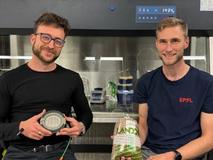 Co-Founder Luke Simons and Jesús Poley-Sanjuán
|
 |
What was the first real signal that your solution worked outside the lab or pitch deck, and what did that moment change for you?
The first real signal came when Swiss seed companies described pathogens affecting their business that existing treatments couldn’t handle, but that we had already successfully inactivated in the lab.
Hearing industry professionals describe exactly the gap our technology fills made the opportunity feel real in a completely different way. That was the moment we realized the true potential of what we were building.
Can you briefly describe your project and where it stood when you entered Venture Kick?
Apolarion replaces chemical pesticides with cold atmospheric plasma generated using only air and electricity. The technology creates reactive species that inactivate pathogens on seeds without toxic chemicals or loss of seed vigour, making it compatible with sustainable and potentially organic agriculture.
When we entered Venture Kick, we already had support from the Swiss Plasma Center at EPFL and the Innogrant program, but we only had a lab testing unit and had not yet met our first customers. Venture Kick helped us start developing an independent prototype and connect with industry through conferences and events, where we secured our first LOIs and investor interest.
How has the direction of your product/service/product strategy changed since working with the Venture Kick Team?
Venture Kick helped us sharpen our focus. We moved from a broad view of the seed treatment market to targeting high-value vegetable seeds, especially for organic growers, where regulatory pressure is highest and our solution has the clearest advantage.
We also refined our business model. Instead of selling products immediately, we’re starting with a service model, lowering adoption barriers and helping us reach revenue and product-market fit faster.
How will the Stage 2 funding help you advance your project concretely?
Stage 2 funding will allow us to build our MVP and move from a laboratory setup to a commercially viable product.
At the same time, it supports business development through international conferences, helping us secure more LOIs with European seed companies and build relationships for future private funding rounds. The technology is validated, now we need to scale it.

The first real signal came when Swiss seed companies described pathogens affecting their business that existing treatments couldn’t handle, but that we had already successfully inactivated in the lab.
Hearing industry professionals describe exactly the gap our technology fills made the opportunity feel real in a completely different way. That was the moment we realized the true potential of what we were building.
Can you briefly describe your project and where it stood when you entered Venture Kick?
Apolarion replaces chemical pesticides with cold atmospheric plasma generated using only air and electricity. The technology creates reactive species that inactivate pathogens on seeds without toxic chemicals or loss of seed vigour, making it compatible with sustainable and potentially organic agriculture.
When we entered Venture Kick, we already had support from the Swiss Plasma Center at EPFL and the Innogrant program, but we only had a lab testing unit and had not yet met our first customers. Venture Kick helped us start developing an independent prototype and connect with industry through conferences and events, where we secured our first LOIs and investor interest.
How has the direction of your product/service/product strategy changed since working with the Venture Kick Team?
Venture Kick helped us sharpen our focus. We moved from a broad view of the seed treatment market to targeting high-value vegetable seeds, especially for organic growers, where regulatory pressure is highest and our solution has the clearest advantage.
We also refined our business model. Instead of selling products immediately, we’re starting with a service model, lowering adoption barriers and helping us reach revenue and product-market fit faster.
How will the Stage 2 funding help you advance your project concretely?
Stage 2 funding will allow us to build our MVP and move from a laboratory setup to a commercially viable product.
At the same time, it supports business development through international conferences, helping us secure more LOIs with European seed companies and build relationships for future private funding rounds. The technology is validated, now we need to scale it.